Google Ads Management for Therapists
Fill your Caseload Faster
Google Ads is the fastest way to put your practice in front of people who are actively searching for therapy right now. Not tomorrow. Not next month. Now.
Done right, a single well-structured campaign can fill your calendar with new client inquiries within the first two weeks. Done wrong, it drains your budget on clicks that never convert.
We specialize in Google Ads for therapists and private practice owners. We've built and managed campaigns across dozens of specialties — and on average, our clients see 40 or more qualified leads per month.
Our Google Ads Services for Therapists
Keyword Targeting & Ad Creation
We research the highest-intent keywords for your specialty and build campaigns around the exact phrases your ideal clients type when they're ready to book. We also write the ad copy — every headline and description is crafted to speak to a client in the moment they need help, and to drive them to take action.
Budget Optimization
We maximize the value of every dollar you put into ads. That means smart bid strategies, negative keyword management to block irrelevant traffic, and ongoing allocation adjustments to put your budget where it's producing the best results. Nothing gets wasted on clicks that were never going to convert.
Continuous Monitoring & Improvement
Google Ads is not a set-it-and-forget-it channel. We analyze campaign performance regularly — clicks, lead quality, conversion rates, cost per lead — and make adjustments on an ongoing basis. Your results get better the longer we work together.
Avg. Qualified Leads Per Month for Our Therapy Clients
%
Cost Per Lead Reduction clinics with our Google Ads
Typical Time from campaign launch to first inquries
See How Many Leads It Takes to Fill Your Therapy Practice
Wondering whether Google Ads is worth it for your specific practice? We built a free calculator that gives you a realistic picture.
Enter a few details about your practice and we'll use real industry data to estimate your customer acquisition cost, how many leads you'd need each month to hit your caseload goal, and what ad spend to consider starting with. No fluff — just the numbers.
What Results Look Like: A Real Campaign
A therapy clinic came to us running Google Ads on their own. Their cost per lead had climbed to $117. They were getting clicks but the leads were poor quality, the targeting was too broad, and they had no dedicated landing pages.
We rebuilt the entire campaign from the ground up: restructured ad groups by specialty, rewrote the ad copy around specific presenting issues, built separate landing pages for each service, and installed proper conversion tracking for the first time.
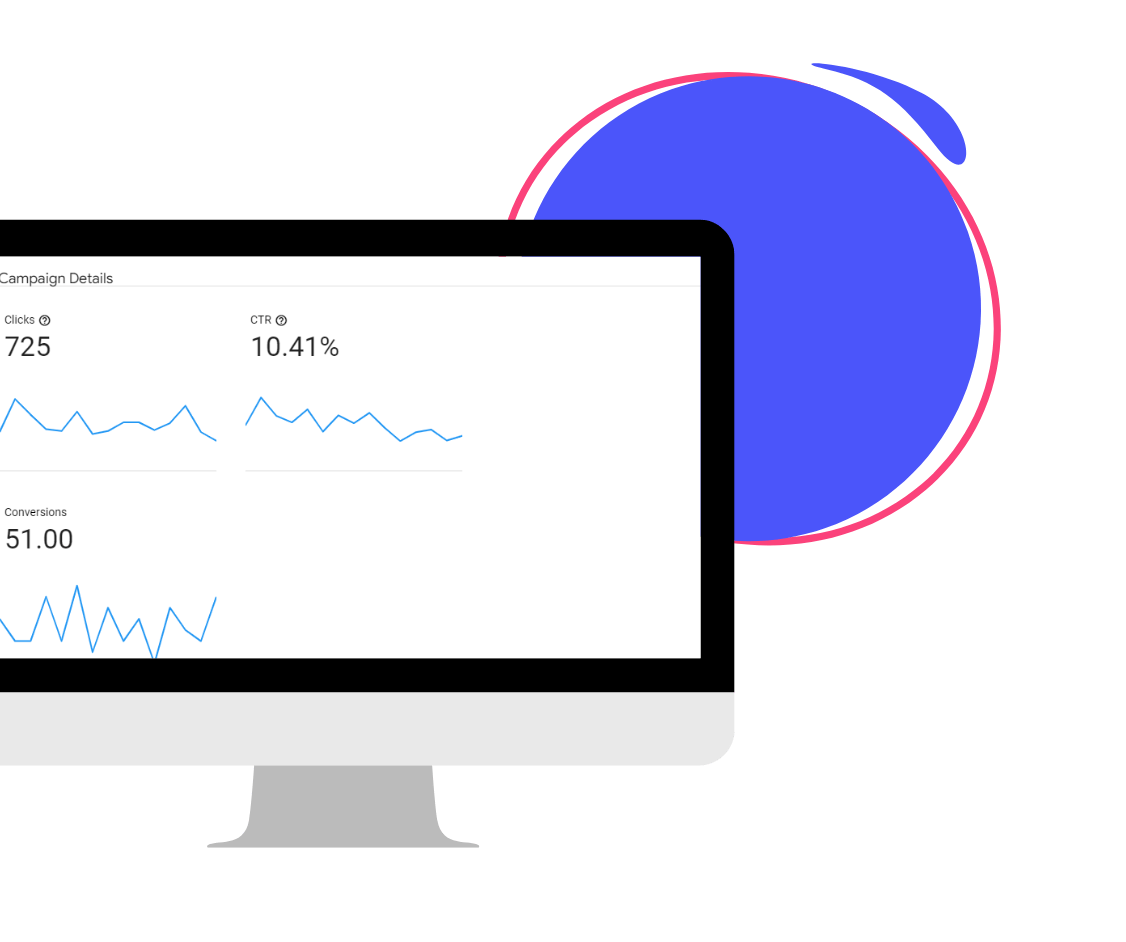
The result: cost per lead dropped from $117 to $41.85, a 64% reduction. Lead volume increased. Lead quality improved. The practice stopped wasting ad spend and started filling its caseload.
|
The difference was not the budget. The budget stayed roughly the same. The difference was campaign architecture, keyword precision, and landing pages that matched what the ads were promising. That is what professional Google Ads management actually produces. |
Our Proven Process for Therapy Practices
Step 1: Discovery and Strategy
We start by learning your practice: your specialties, your ideal client profile, your geographic market, and your current marketing setup. Every campaign we build is designed specifically for you, not copied from a generic template.
Step 2: Campaign Build and Launch
We handle everything from keyword research and ad copy to landing page setup, conversion tracking installation, and campaign architecture. Most practices are live within 10 to 14 days of kickoff.
Step 3: Optimize and Scale
In the first 30 days, we gather real performance data. What keywords are converting? What ad copy is resonating? What is the actual cost per qualified lead? We double down on what is working and cut what is not.
Step 4: Report and Refine
Monthly reports give you full visibility into your results. We tell you exactly what happened, what we are changing, and why. No mystery. No vague claims. Just the numbers.
Questions About Google Ads for Therapy Practices
How quickly will I see results?
Google Ads can generate leads within the first few days of launch. The first 2 to 4 weeks are primarily a data-gathering and optimization period. Most practices reach consistent lead flow by week 3 to 6, with performance continuing to improve over time as the campaign learns.
How much should I budget?
We recommend a starting ad spend of $450 to $600 per month. This gives the algorithm enough data to optimize and typically generates 8 to 15 leads per month at $30 to $60 per lead. As results become consistent, scaling up to $900 or $1,500 per month increases volume proportionally. The management fee is separate from your ad spend.
What happens if the campaign needs adjustments?
That is a normal part of the process, not a sign something went wrong. We monitor continuously and make adjustments to targeting, bidding, and ad copy as performance data comes in. You are informed of any significant changes before they are made.
Will I be able to track results?
Yes, with full specificity. We set up conversion tracking for form submissions, phone calls, and appointment bookings before launch. Every month you receive a report showing your impressions, clicks, leads generated, cost per lead, and what we are doing to improve.
UNDERSTANDING GOOGLE ADS FOR THERAPISTS
Whether you are considering Google Ads for the first time or have tried them before without success, the sections below walk through exactly how this channel works for therapy practices, what a properly built campaign looks like, and what separates the campaigns that fill caseloads from the ones that drain budgets.
How Google Ads Actually Works for Therapists
Google Ads is a pay-per-click (PPC) platform. You bid on specific keywords. When someone searches one of those keywords, Google runs an instant auction among all advertisers bidding on that term and shows the winning ads at the top of the search results page. You pay only when someone clicks your ad, not when it is shown.
What makes Google Ads uniquely powerful for therapy practices is the intent behind the search. When someone types "anxiety therapist near me" into Google, they are not casually browsing. They are actively looking for help right now. That is a completely different visitor than someone who sees a Facebook ad while scrolling through their feed.
| Channel | Visitor Intent | Time to First Lead | Ongoing Cost |
| Google Ads | High: actively searching for a therapist | Days | Ad spend while running |
| Facebook/Instagram Ads | Medium: may be open to therapy | Weeks | Ad spend while running |
| SEO (organic) | High: actively searching | Months | Content and optimization |
| Psychology Today | Medium: browsing profiles | Varies | Monthly directory fee |
| Word of mouth | Very high: personal referral | Unpredictable | Relationship investment |
The auction Google runs for each search is not purely about who bids the most. Google uses a Quality Score that weighs your bid alongside the relevance of your ad copy and the quality of the page you send traffic to. A well-built campaign can outrank competitors bidding more money simply by being more relevant to the searcher. That is why campaign structure matters as much as budget.
Why Google Ads Outperforms Social Media for Therapy Practices
Therapists often ask whether Facebook or Instagram ads are a better investment. The answer depends on your goal, but for filling a caseload with new clients, Google Ads consistently outperforms social media. Here is why.
On Google, someone who clicks your ad was searching for a therapist. They raised their hand. On Facebook, someone who sees your ad was scrolling their feed and you interrupted them. The mental state is completely different. A person searching "EMDR therapist Denver" is ready to take action. A person seeing an ad for therapy while looking at vacation photos is not.
This does not mean Facebook ads are useless for therapists. They work well for building brand awareness, promoting lead magnets, and nurturing warm audiences who have already visited your website. But for direct, fill-my-caseload-this-month results, Google Ads has the higher-intent traffic.
|
✓ PRO TIP If budget is limited and you have to choose one channel, start with Google Ads. Once your caseload is full and you have money to invest in building a pipeline for future growth, add Facebook or Instagram ads as a secondary channel. |
|
Related Reading → Understanding Paid Ads for Therapy Practices: Google vs. Social Media |
Keyword Strategy: What to Target and What to Avoid
The keywords you bid on determine who sees your ads. Get this right and your budget reaches clients who are ready to book. Get it wrong and your budget disappears on people who were never going to call.
High-Intent Keywords That Convert for Therapy Practices
High-intent keywords are searches that indicate the person is close to booking a session, not just researching therapy in general. These are your primary targets.
- Specialty-specific searches: "trauma therapist near me," "EMDR therapist [city]," "OCD therapist [city]," "CBT for anxiety [city]"
- Service and modality searches: "Gottman couples therapist," "DBT therapy [city]," "somatic therapy near me"
- Geographic searches: "therapist in [city]," "counseling [city/zip]," "[neighborhood] therapist"
- Presenting issue searches: "therapy for anxiety near me," "depression counseling [city]," "couples counseling near me"
- Telehealth searches (if applicable): "online therapist [state]," "virtual therapy [state]," "telehealth counseling"
Keywords to Avoid
Not every therapy-related search comes from someone looking to book a session. Bidding on irrelevant keywords wastes budget on clicks that will never convert.
- Informational searches: "what is CBT," "how does EMDR work," "types of therapy" - these searchers want information, not an appointment
- Free resource searches: "free therapy resources," "free mental health worksheets," "free anxiety exercises"
- Career searches: "how to become a therapist," "therapy jobs," "LCSW requirements," "MSW program"
- Price-sensitivity searches: "cheap therapy," "affordable counseling," "therapy sliding scale" - these signal price-first searchers who may not convert at your rate
| The most expensive Google Ads mistake therapists make is not setting up negative keywords before launch. Every search in the "avoid" category above can trigger your ad if negative keywords are not in place. You pay for every click, whether it is a potential client or a social work student doing research. We build a comprehensive negative keyword list into every campaign before the first dollar is spent. |
|
Related Reading |
Campaign Structure: Why Architecture Matters
Most therapists who try Google Ads and fail are not failing because of their budget or their location. They are failing because of how the campaign is structured. Specifically, they lump all their services into one ad group, write generic ad copy, and send all traffic to their homepage.
Google rewards relevance at every level of the campaign. The more closely your keywords, your ad copy, and your landing page align with what the searcher typed, the higher your Quality Score, the lower your cost per click, and the better your conversion rate. Poor structure means you pay more for clicks and convert fewer of them.
The Right Campaign Structure for a Therapy Practice
A well-built therapy practice campaign is organized so that each specialty or service has its own ad group, with keywords, ad copy, and landing pages that all speak specifically to that service.
- Separate ad groups by specialty. Anxiety therapy, trauma therapy, couples counseling, and adolescent therapy should each live in their own ad group. The keywords in each group should only be relevant to that service.
- Write ad copy specific to each ad group. An ad for your anxiety therapy service should speak directly to someone experiencing anxiety, not to a generic "therapy seeker." Specific headlines outperform generic ones in click-through rate and conversion.
- Send each ad group to a dedicated landing page. The page someone lands on after clicking should match exactly what the ad promised. "Anxiety therapist in Denver" ad should go to a page specifically about your anxiety therapy services in Denver, not your homepage.
- Use ad extensions. Call extensions, sitelink extensions, and callout extensions increase the size and information density of your ad, improving click-through rates without increasing cost per click.
|
✓ PRO TIP A well-structured campaign costs less per click than a poorly structured one, even targeting identical keywords. Google's Quality Score discounts your cost per click when your ad copy and landing page are highly relevant to the searcher's query. The investment in proper structure pays back in lower CPCs within the first 30 days. |
Writing Ad Copy That Gets Clicks and Converts
Your ad copy is the first impression a potential client has of your practice. It needs to do two things simultaneously: give them enough confidence to click, and filter out the people who are not a fit.
What High-Converting Therapy Ad Copy Looks Like
The best-performing therapy ads share a few characteristics. They speak directly to a specific presenting problem or client situation. They communicate credibility without jargon. They make the next step clear and easy.
| Generic Ad (Low Performance) | Specific Ad (High Performance) |
| "Licensed Therapist in Denver. Accepting New Clients. Call Today." | "Anxiety Therapist Denver. Specialized CBT for High-Functioning Anxiety. Free 15-Min Consultation." |
| "Couples Counseling Available. Experienced Therapist. Book an Appointment." | "Gottman-Trained Couples Therapist in Austin. Practical Tools for Real Communication. Book a Consultation." |
| "Mental Health Services for Adults. Compassionate Care. Contact Us." | "Trauma Therapy in Nashville. EMDR for PTSD and Complex Trauma. New Client Openings Available." |
Notice what the specific ads do differently. They name the specialty or modality. They address the client's situation directly. They include a specific, low-friction CTA rather than a vague "contact us." And they give the searcher a reason to choose you over the other results on the page.
Every ad in Google's responsive search ad format allows up to 15 headlines and 4 descriptions, which Google tests in different combinations. We load every slot with specific, tested copy rather than leaving fields empty, which significantly improves both Quality Score and click-through rate.
Landing Pages: Where Clicks Become Clients (or Disappear)
Your ad gets the click. Your landing page gets the booking. These are two completely different jobs and most therapists treat them like one.
When a potential client clicks on a "trauma therapy" ad and lands on a homepage with 12 different service categories, a staff bio, a blog section, and a contact button buried at the bottom, they leave. Not because they are not interested in therapy, but because the page failed to immediately confirm they are in the right place.
What a High-Converting Therapy Landing Page Needs
- Headline that mirrors the ad. If the ad said "Anxiety Therapist Denver," the landing page headline should say something immediately related: "Anxiety Therapy in Denver" or "Specialized Care for Anxiety and Panic Disorders." Relevance between ad and page is one of Google's Quality Score factors and one of the biggest drivers of conversion.
- Specific description of who you help. Two or three sentences explaining the specific clients you work with, the specific issues you treat, and what working with you looks like. Not a biography, not a philosophy statement, a positioning statement for this specific client.
- Social proof. One or two specific testimonials, a case outcome or result (without identifying information), or credentialing that directly relates to the service advertised.
- Fee and out-of-network information. State your fee clearly. Add the one-sentence note about superbills and out-of-network benefits for PPO clients. Clients who cannot find your rate leave before contacting you.
- One call to action, prominently placed. A consultation booking link or a simple contact form. Not a navigation menu pulling them to other pages. Not five different options. One next step, above the fold.
| A landing page that takes a visitor from click to form submission in under 90 seconds will consistently outperform a beautifully designed page that buries the CTA and asks the visitor to read four paragraphs before they can take action. Speed to decision is the goal. |
Google Ads Budgets for Therapy Practices: What to Expect
Budget questions are the most common ones we get, and the most common source of confusion. Here is the straightforward version.
Starting Budget Ranges
The right starting budget depends on your market, your specialty, and your cost-per-click benchmarks. As a general framework:
| Monthly Ad Spend | Typical Volume | Best For |
| $450 to $600/month | 8 to 15 leads/month | Solo practitioners testing the channel or in lower-competition markets |
| $600 to $900/month | 15 to 25 leads/month | Practices ready to grow with a proven campaign structure in place |
| $900 to $1,500/month | 25 to 40+ leads/month | Group practices filling multiple caseloads simultaneously |
| $1,500+/month | 40+ leads/month | High-competition markets or practices targeting multiple specialties |
These ranges assume a properly built campaign. A poorly structured campaign at $1,500/month will produce worse results than a well-structured campaign at $500/month. Structure first, then scale.
The Client Lifetime Value Calculation
The question is not "how much does a click cost?" The question is "what is a new client worth?"
A client who books 10 sessions at $150 generates $1,500 in revenue. If your campaign produces one new client for every $60 to $100 in ad spend, that is a 15x to 25x return on investment. When you frame the budget decision that way, the math is straightforward.
|
Related Reading → How Much Should Therapists Spend on Google Ads? A Practical Breakdown |
Conversion Tracking: Why You Cannot Manage What You Cannot Measure
Click volume is a vanity metric. Cost per conversion is the number that matters.
A campaign can have a high click-through rate and still be generating zero clients if those clicks are landing on a page that does not convert. Without conversion tracking, you cannot tell the difference between a campaign that is working and one that is burning your budget. You are managing by guesswork.
Conversion tracking records the specific actions that indicate a potential client has taken a meaningful step: submitting a contact form, clicking a phone number, booking a consultation through your scheduling link. When conversion tracking is configured correctly, you can see exactly which keywords, which ads, and which landing pages are producing clients, not just clicks.
What We Track and Why
- Form submissions: when a visitor completes your contact form, that is a lead. We track the source keyword, the ad, and the page that produced it.
- Phone call clicks: especially on mobile, many therapy clients prefer to call. We track calls that originate from ad clicks separately from organic calls so campaign performance is accurately measured.
- Appointment booking completions: if you use a scheduling tool, we track completed bookings as high-intent conversions and optimize toward those specifically.
- Cost per conversion over time: the aggregate view that tells us whether the campaign is becoming more or less efficient, and where to make adjustments.
|
✓ PRO TIP Set up conversion tracking before you spend your first dollar on ads, not after. Retroactive conversion data does not exist. Every week you run ads without tracking is a week of data you can never recover for optimization. This is one of the first things we configure in every new campaign setup. |
Google Ads and SEO: Faster Together
Google Ads and SEO are not competing channels. They are complementary ones that produce better results when running simultaneously than either produces alone.
SEO builds long-term organic visibility that compounds over time. A well-optimized therapy website can generate consistent organic leads at very low ongoing cost, but it typically takes 3 to 9 months to reach competitive rankings. Google Ads produces leads within weeks but requires ongoing spend to maintain.
For practices in growth mode, running both simultaneously means you get immediate lead flow from ads while building the organic visibility that will eventually allow you to reduce ad dependence. The data from your ads also informs your SEO: the keywords that convert in paid campaigns are the keywords most worth optimizing your organic content for.
|
Related Reading → SEO for Therapists and Private Practice Owners → The Ultimate Guide to Digital Marketing for Therapists and Private Practices |
Is Google Ads Management Right for Your Practice?
Google Ads management is a strong fit for your practice if:
- You are an established practice (solo or group) with a consistent clinical schedule and capacity to take on new clients
- You want to fill your caseload faster than SEO or word-of-mouth alone will allow
- You have a specific specialty or service you want to promote and a website or landing page in place to receive that traffic
- You are willing to invest in ad spend alongside management fees (minimum recommended: $450/month in ad spend)
- You have tried running ads yourself and are not seeing the results the channel should produce
This may not be the right fit if:
- You are not yet licensed or not currently accepting new clients
- Your website has no contact form, no phone number, and no way for a visitor to reach you (fix this first)
- You are looking for results with no ongoing investment in ad spend
Ready to Fill Your Caseload with Google Ads?
We handle everything from campaign structure to monthly optimization. You handle the clients.